What to Wear to an Indian Wedding: A Complete Style Guide for NRI Guests
If you are marrying across cultures, or marrying into an Indian family, the wardrobe question arrives early and loudly. Relatives send red lehengas. Friends send ivory gowns. Pinterest sends both in the same sitting. You are trying to honour a tradition you may not have grown up in, without spending three days dressed as a theme.
Indian wedding clothing is not one “ethnic look.” It is a sequence of events with different jobs: colour and mess at haldi, movement at sangeet, ritual weight at the ceremony, a clearer silhouette at night. Once you see it that way, the closet gets simpler. You are not failing tradition if you do not wear the heaviest thing in the shop. You are failing the day if you cannot sit, walk, or recognise yourself.
Direct answer: Plan the wardrobe by event, not by Pinterest. Choose lighter, washable, easy silhouettes for haldi and mehndi; something you can dance in for sangeet; the most meaningful Indian or fusion piece for the ceremony; a cleaner, often lighter look for the reception. Keep one cultural thread consistent colour family, jewellery, or drape — so the album reads as one wedding, not two costume changes. Comfort is not a Western preference. It is how Indian festive wear actually gets through a long function.
What you are actually dressing for
Most Indian and Indian-diaspora weddings run over several days. Each function has its own dress code, even when nobody writes it down.
That matters if this is your first time in a lehenga or a saree. You do not need five equally bridal outfits. You need the right weight of clothing for the right hours.
It also helps to name your role. The rules are not the same for everyone:
- The bride can carry more colour, more jewellery, and more symbolism. She is also the person who cannot disappear into a bathroom to renegotiate a blouse for forty minutes.
- A partner from another culture is usually welcomed in Indian menswear or a respectful fusion look; “trying” reads better than a rented costume that does not fit.
- Immediate family is often expected to look festive and coordinated, not bridal.
- Guests should not outshine the couple, wear the bride’s announced colour if she has claimed one, or treat the event as fancy dress.
If you are the bride in an intercultural ceremony, you are allowed to look like yourself in Indian clothes. That is different from looking like a catalogue bride who happens to have your face.
Respect is not the same as costume
Ethnic wear at an Indian wedding is not a mood. For many families it is memory: a drape a mother knows by hand, jewellery that has already been in photographs, a colour that means auspicious rather than merely pretty.
You do not have to inherit that whole script. You do have to avoid treating it as decoration.
What usually reads as respect:
- Clothes that are festive, modest enough for the actual rituals (ask — temples, gurdwaras, homes and hotels differ)
- Covered shoulders or a dupatta you can use if elders or a priest expect it
- Jewellery that looks considered, not like a prop kit
- Footwear you can stand in on carpets, lawns, marble and sometimes floors you will sit on
What usually reads as costume:
- A novelty print of gods or “exotic India” slogans
- A poorly fitted rented lehenga with a blouse that gapes
- Tribal or temple jewellery piled on because it looked bridal on Instagram
- Showing up in pure white to a ceremony where white reads as mourning, unless the couple has clearly chosen a white/ivory brief
- Copying the bride’s exact colour and density of work if you are a guest
If you are unsure, ask one specific question of someone in the family: “For the ceremony, do you want me in a saree, a lehenga, or is a well-cut suit enough?” Specific questions get usable answers. “What should I wear?” gets a flood.
Event by event: what the clothes have to survive
| Function | What the day does to clothes | What usually works | What usually fails |
|---|---|---|---|
| Haldi | Paste, oil, hugs, sitting on the floor | Cotton, mulmul, simple silk-cotton; yellows, whites you can sacrifice, easy kurtas and lehengas | Heavy zari, pale unlined silk you hope to wear again, heels |
| Mehndi | Hours of sitting, henna, heat, photos from above | Lightweight georgette, chiffon, cotton; bright but not bridal-heavy; sleeves you can push | Tight blouses, white you cannot stain, a trailing pallu |
| Sangeet | Dance, arms up, late night | Sequins or mirror in a manageable amount; lehenga, sharara, pre-drape, Indo-western; shoes you can move in | Stiff can-can, a dupatta that needs a dresser, a blouse you cannot lift in |
| Ceremony | Ritual, elders, long sitting, the photographs that last | The piece with meaning: saree, lehenga, or intentional fusion; fit over density; a colour you can defend | Unstable drape, neckline that gapes when you look down, weight that hurts by the vows |
| Reception | Night light, mixing with another culture’s guests, speeches | Cleaner silhouette, often lighter than the ceremony; colour that holds under indoor light | Tiny motifs that vanish after 8pm, a train nobody can navigate, competing with the cake |
You can repeat a colour story across days and change only silhouette and density. That is how intercultural albums stay coherent.
Haldi and mehndi: bright, washable, unprecious
These are not the days to debut heirloom work.
Haldi is turmeric. It stains. Wear something you like enough to photograph and do not mind retiring or keeping as a stained memory. Yellow, ivory you accept might not survive, marigold, leaf green. Cotton and light silks. A simple kurta set, a cotton lehenga, a sharara you can sit in.
Mehndi is a long sit. Your outfit will be photographed from above while someone holds your hands still. Choose a neckline that looks finished from that angle, sleeves that roll, and fabric that does not stick to henna. Pinks, greens, oranges and festive yellows are at home here. Save dense embroidery for later. You need to be able to eat, laugh and not guard a pallu.
If Indian clothes are new to you, this is the easiest place to start: a well-fitted kurta or Anarkali with a dupatta you can actually keep on your shoulder.
Sangeet: fashion is allowed; engineering still counts
Sangeet is where people expect sparkle. It is also where first-time lehenga wearers discover they cannot raise their arms.
Choose movement first. Georgette, chiffon, lighter net with lining, a sharara with the right length, a pre-draped saree if you want the look without the 6 a.m. lesson. Sequins and mirror work are fine if the blouse lets you dance and the dupatta is stitched, pinned, or optional.
Indo-western belongs here more easily than at a temple ceremony: a crop blouse with a lehenga, a drape gown with Indian surface, a jumpsuit with a heavy jacket. Keep one thing Indian enough that it does not look like you skipped the brief — jewellery, a dupatta, or the cut of the pants.
If your other culture’s celebration is a rehearsal dinner the same weekend, do not make sangeet and that dinner visually identical. Let Indian festive be Indian festive.
The ceremony: meaning over maximum work
This is the outfit that will be paused on. It does not have to be red. It does not have to be a lehenga. It does have to hold up while you sit, stand, walk around fire or a grant sahib or a mandap, and be hugged by people who are crying.
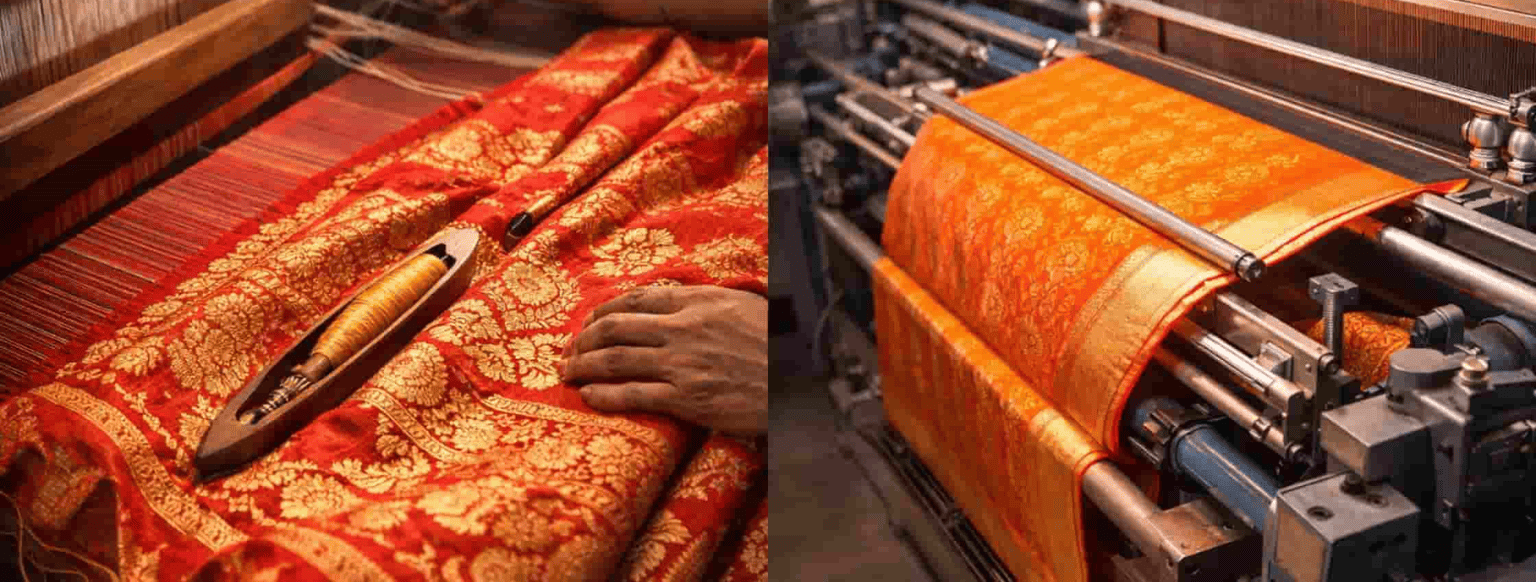
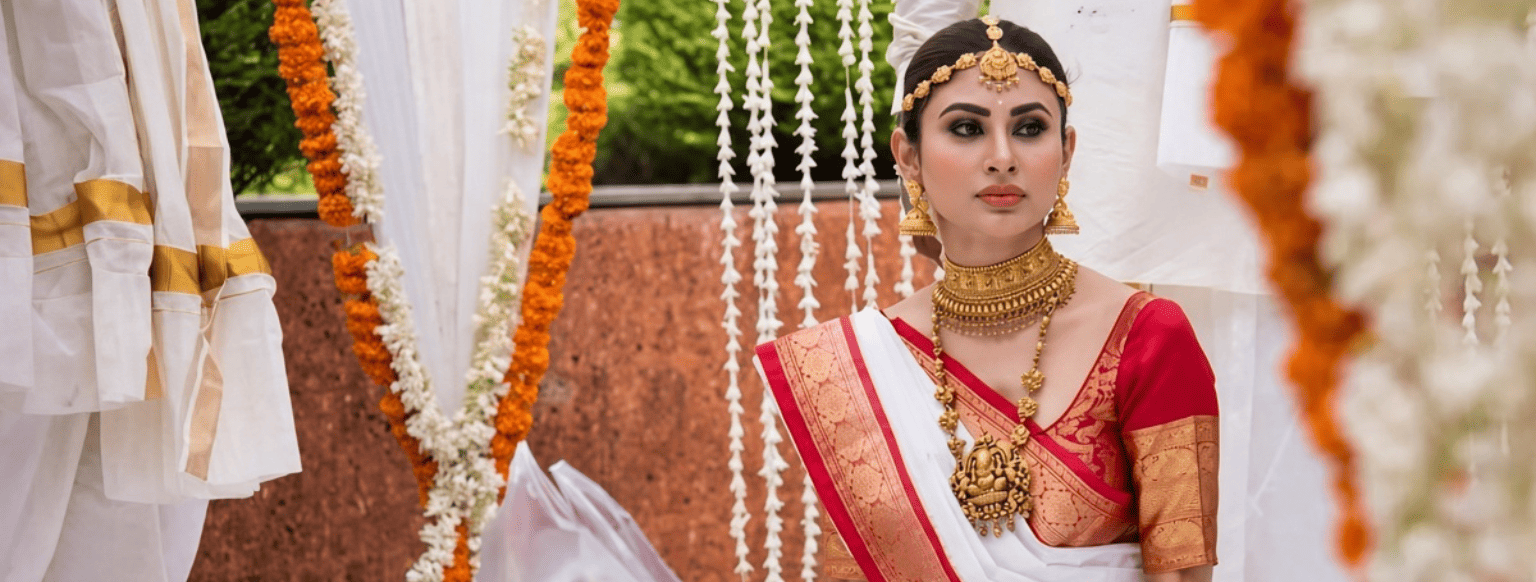
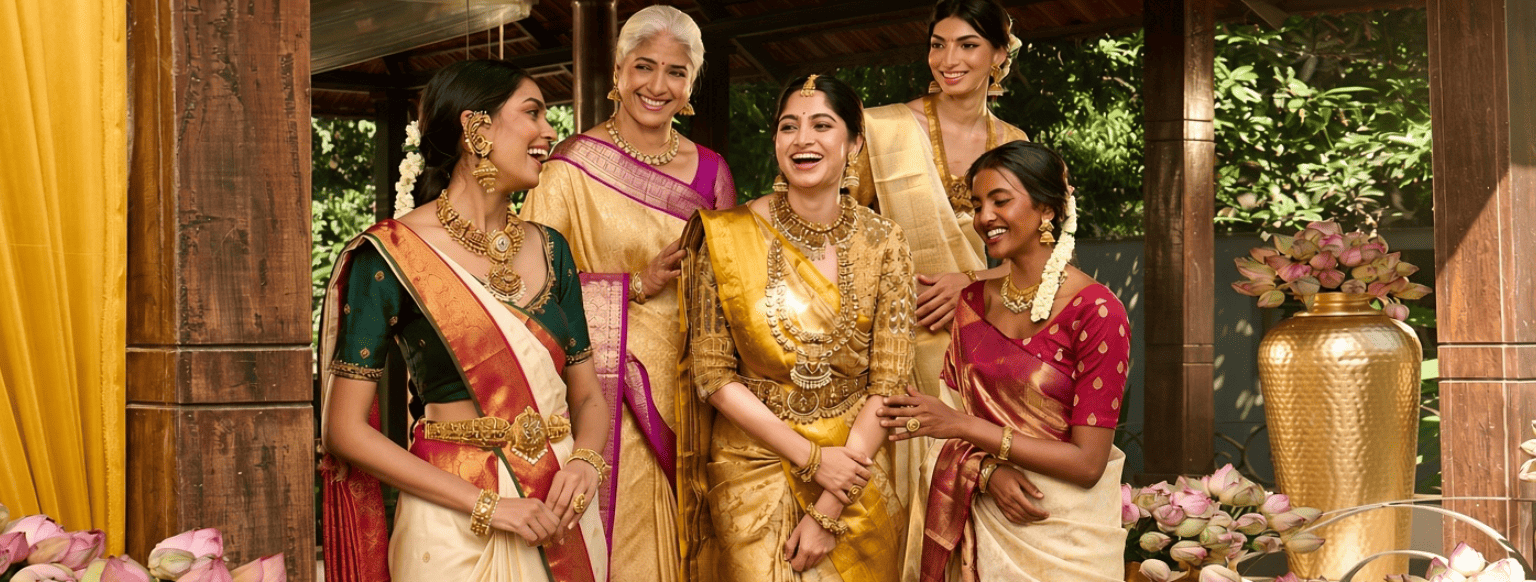
Saree. Unmatched for ritual in many families. Only choose it if you, or a designated dresser you trust, can keep the drape through sitting and walking. A pre-draped or stitched drape is not a lesser choice; it is how many intercultural brides stay present instead of negotiating pleats. Kanjeevaram, Banarasi, organza and georgette all tell different stories — silk for heritage weight, lighter cloth for heat and travel.
Lehenga. Easier for many people who did not grow up draping. The blouse and waist are the whole game. If those two are wrong, no amount of zari will save the photograph. Classic flare is more forgiving for floor rituals than a mermaid hem.
A strong suit or Anarkali. Valid, especially if modest coverage or ease matters more to you than a bridal skirt. Make the fabric and finish high enough that it does not look like you underdressed for your own pheras.
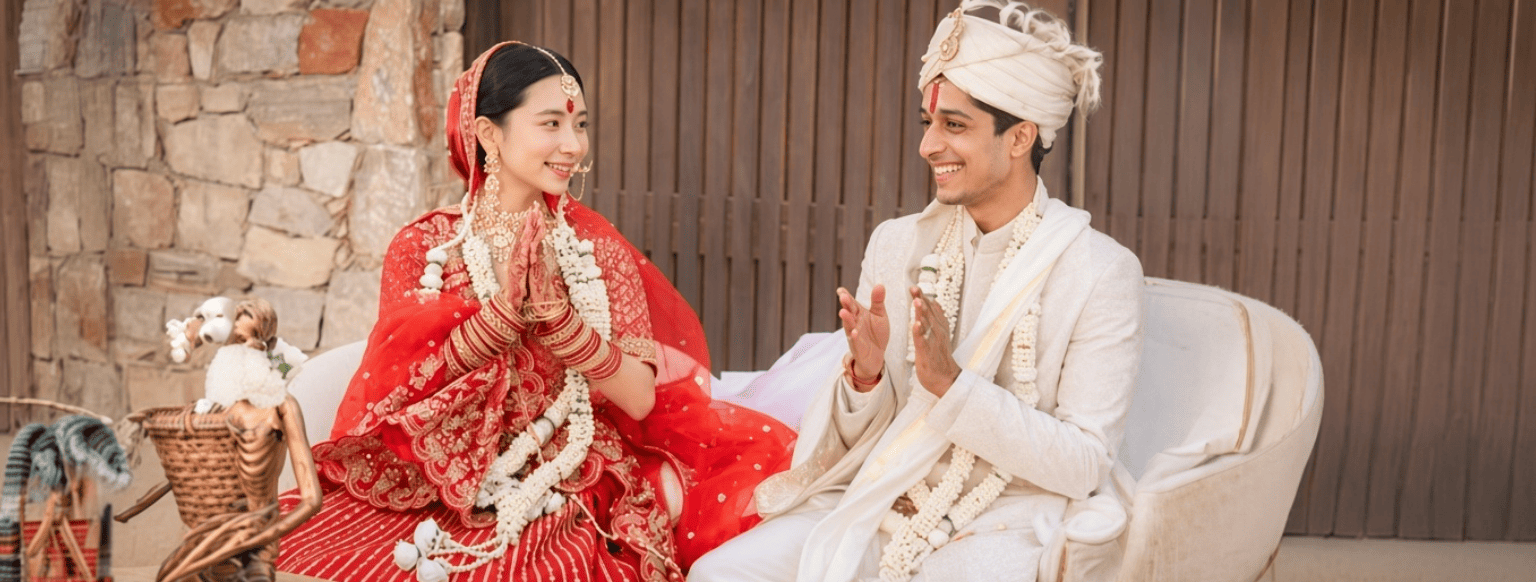
Colour: red, maroon, rani and gold still read as bridal in a lot of rooms. Ivory, gold, blush, green and jewel tones are widely worn now, especially in diaspora and fusion weddings. If elders want red and you do not, a red dupatta, red blouse, or red jewellery on a quieter field is a real compromise, not a cop-out.
If you are also having a ceremony in another tradition the same day or weekend, decide which outfit carries which ritual. Two full bridals in twelve hours is how people get blistered and visually confused. Often one event gets the heritage textile and the other gets a cleaner silhouette in a related palette.
Reception: the room is mixed; the outfit should still decide something
Receptions often include guests who have never been to an Indian function. Night lighting is unkind to dusty pastels and tiny motifs.
A reception is a good place for:
- A lighter lehenga than the ceremony
- A gown with Indian embroidery if that is genuinely your style
- A saree in a deeper evening colour
- Less jewellery if the ceremony was heavy, or a stronger neckline if the ceremony was covered
This is where fusion is easiest to defend: the dancing is done, the priest has gone, and the photographs are more fashion than ritual. Still keep a thread from the wedding day so you do not look like a different couple walked in.
Silhouettes if you did not grow up in these clothes
You do not owe anyone a six-metre drape on a deadline.
Easiest first Indian festive looks
- Straight or A-line kurta with palazzo or churidar and a dupatta pinned at both shoulders
- Anarkali that clears the floor in your actual shoes
- Lehenga with a stitched blouse you have practised in, plus a dupatta you can take off for dinner
- Sharara if the length is exact — too long and you trip; too short and it looks unfinished
- Pre-draped saree with a blouse that fits like a shirt, not a sample
Harder without practice
- Nivi drape on slippery georgette, outdoors, with wind
- Heavily can-canned lehenga on grass
- Fish-cut for a ceremony with floor sitting
- Unstitched blouse you have never had fitted
Try the outfit at home for an hour. Sit on the floor. Climb a step. Hug someone. Eat. If you need a second person to exist in the clothes, hire that person for the day or choose a different construction.
Made-to-measure is worth more here than another row of sequins. Intercultural brides often have different shoulder and torso proportions than the sample. A gaping blouse reads as unfinished in every culture.
Fusion that looks like a decision
Fusion fails when every idea is in the frame: Indian skirt, Western corset, statement necklace, church veil, sneakers, temple jewellery.
It works when you change one or two variables:
- Indian lehenga, contemporary blouse, your usual metal
- Family saree, simpler jewellery, hair you already wear
- Ivory or champagne field, Indian border, grandmother’s earrings from the other side
- Groomswear in a sherwani with shoes from his own tradition, or a suit with an Indian stole that is actually tied well
Write the brief in a sentence: “Indian silhouette, my colours” or “His culture’s dress code, my jewellery” or “Red because her mother asked, cut because I asked.” If you cannot say the sentence, the outfit will look like a committee.
Dupatta and veil in the same photo is a frequent collision. Pick the one the ritual needs.
Colour, jewellery and the things relatives will comment on
You do not need a lecture on every regional code. You do need a few loaded ones:
- White/ivory: fine for many modern and Christian-fusion receptions; ask before wearing it as your only ceremonial colour if the family treats white as funeral dress.
- Black: increasingly common at sangeets; still a question for some morning rituals. Ask.
- Red and maroon: still the most “bridal” in many North Indian and broader Hindu contexts. Guests should not compete.
- Bright yellow / marigold: at home at haldi; not automatically bridal.
If the couple has published a palette, guests should use it. If you are the bride, you can ignore a trend palette that washes you out. Your face in the photographs is the brief.
Jewellery: if Indian clothes are new, start smaller than the boutique suggests. A pair of earrings and a bangle stack often looks more expensive than a full bridal set you do not know how to hold your head in. Match metal to the zari you actually have, not to a rule about gold always meaning traditional.
Maang tikka, nath and kalire carry specific bridal signals. Wear them if they mean something to you or the family; do not wear them as decoration if you are a guest.
Shoes: juttis and block heels on carpets; wedges or platforms on lawn; something you can stand in for rituals. A beautiful hem with the wrong shoe looks unresolved in every aesthetic.
Comfort is part of looking like you belong
People who wear lehengas often have a different tolerance for weight, lining and hooks. If you do not, you are not being difficult. You are being accurate.
Prioritise:
- Blouse that closes without a death grip
- Lining that does not scratch
- A dupatta strategy (stitched, pinned, or off)
- Fabric for the actual climate — georgette and cotton in heat; silk and velvet only if the room is cold
- A bathroom plan (who helps, how the skirt behaves)
Lightweight does not mean less festive. A well-cut georgette with disciplined embroidery photographs as intention. A stiff, overworked skirt you kick forward photographs as endurance.
A wardrobe that does not require a second suitcase of identity
A coherent intercultural weekend often looks like this:
- Haldi: simple, stainable, easy.
- Mehndi: colour, light work, sit-friendly.
- Sangeet: the fashion swing, still danceable.
- Ceremony: the meaningful Indian or blended piece.
- Reception: cleaner, evening, mixed-guest readable.
Repeat metals and a colour family. Change density. You will look like one person.
If budget is tight, spend on ceremony fit and one sangeet look you will actually move in. Do not equally fund five mediocre outfits because a blog said every function needs a “story.”
Pack jewellery in a separate pouch so it cannot pick zari. Practise the drape once, in the shoes. Eat a meal in the blouse. These are unglamorous and they are the whole difference between looking at home and looking dressed up.
What not to do
- Do not learn a saree drape for the first time on the mandap morning.
- Do not wear the bride’s twin if you are a guest.
- Do not treat religious spaces as a cocktail dress code without asking.
- Do not pile on every Indian accessory you were gifted “to be safe.”
- Do not choose an outfit you cannot sit in because it looked regal on a mannequin.
- Do not outsource the final veto. Family can name customs. Only you know if you disappear inside the clothes.
Cross-cultural weddings are already a negotiation. The clothes should reduce friction, not add a second identity crisis. When the outfit is right, you can do the rituals, dance the sangeet, and still look like the person your partner recognised — just in better fabric.
FAQs
What should a non-Indian bride wear to an Indian wedding ceremony?
A well-fitted lehenga, saree (including pre-drape) or refined Anarkali in a colour you can stand beside the family’s expectations. Prioritise blouse fit, a drape you can keep, and fabric for the weather. You do not need the heaviest embroidery in the room to look like the bride.
What do I wear to mehndi and haldi if I have never worn Indian clothes?
Light, bright, washable sets: cotton or georgette kurta, simple lehenga or sharara, easy dupatta. Expect stains at haldi. Avoid heirloom silk and heavy zari. Sit in the outfit before the day.
Is fusion wear appropriate for the main ceremony?
Yes if it is intentional — Indian drape or skirt with a blouse or colour that is yours, or a heritage textile with simpler jewellery. It fails when ritual clothes and a second tradition’s symbols compete in one frame. Ask what the ceremony actually requires for coverage.
Can I wear white or ivory to an Indian wedding?
As a guest, usually avoid looking bridal-white unless the couple asked for it. As a bride, ivory is common in modern and fusion weddings; check whether older relatives treat white as mourning for the ritual itself. A cream lehenga with gold or colour in the jewellery is often an easier read than stark white.
Lehenga or saree for a first-time wearer?
A fitted lehenga is usually easier to live in for hours. Choose a saree if it matters culturally or photographically and you have a drape you can maintain (or a pre-drape). A slipping pallu is not more authentic.
What should guests wear to a cross-cultural Indian wedding?
Festive ethnic or polished fusion, below the couple in density and not in the bride’s claimed colour. Covered options you can sit in. No costume jewellery sets, no white-as-bride, no temple props. When unsure, a well-cut kurta set or a modest festive dress plus a dupatta or stole is safer than an ill-fitting rented bridal.
How do I honour both families in the outfits?
Give each ceremony a primary language of dress, then repeat one thread (colour, metal, a textile, a piece of jewellery) so the weekend is one story. Do not wear both full traditional looks at once unless you have the time and the stamina.
What is the biggest mistake intercultural brides make with Indian fashion?
Buying for the photograph instead of the function — too much weight, an untested drape, a blouse that does not close, or so much “Indian-ness” that their own face disappears. Fit, practice and a clear brief beat more sparkle.