Top 15 Lovely Traditional Sarees Across Different Indian States
15 Traditional Sarees of India by State: A Guide to Iconic Regional Weaves
A saree is never just six yards of fabric. In India, it can carry the memory of a region, the skill of a weaving community, the mood of a festival, and the quiet pride of a family heirloom. One saree may be known for temple-inspired borders, another for delicate embroidery, another for a golden sheen that becomes richer with age.
That is what makes the traditional sarees of India so fascinating. Each state has developed its own textile language through local materials, climate, history, trade, ritual, and craftsmanship. Some sarees are grand enough for bridal wear, while others are light, breathable, and made for everyday elegance.
This guide explores 15 famous types of sarees in India, where they come from, what makes them special, and when you might choose to wear them.
Why Indian Sarees Differ from State to State
India’s saree traditions are shaped by geography as much as by culture. Hot and humid regions often developed airy cotton weaves. Royal courts encouraged rich silks, zari work, and elaborate motifs. Temple towns inspired borders, checks, and sacred symbols. Coastal and eastern regions became known for breathable handlooms, while western India refined tie-dye and ikat traditions.
A saree’s identity usually comes from a mix of:
- Fabric, such as cotton, silk, wool, or silk-cotton blends
- Weaving method, including brocade, ikat, jamdani, or plain weave
- Motifs, such as peacocks, lotuses, temples, flowers, animals, or mythological scenes
- Borders and pallu design
- Regional draping and styling traditions
- Occasion, from daily wear to bridal ceremonies
Here are some of the most loved traditional sarees of India, arranged by region and state.
1. Kanjivaram Saree — Tamil Nadu
The Kanjivaram, also called Kanchipuram silk, is one of India’s most celebrated bridal sarees. Woven in and around Kanchipuram in Tamil Nadu, it is known for its rich silk body, striking borders, and lustrous zari work.
Kanjivaram sarees often feature motifs inspired by temples, checks, flowers, peacocks, and traditional South Indian design elements. Their appeal lies in their structure: they feel grand, hold their shape beautifully, and photograph exceptionally well at weddings and ceremonial events.
Best for
Weddings, bridal trousseaus, temple ceremonies, family functions, and major festivals.
Styling idea
Pair a deep-toned Kanjivaram with temple jewellery, a traditional bun, and a contrast blouse for a classic South Indian look.
2. Banarasi Saree — Uttar Pradesh
The Banarasi saree from Varanasi is closely associated with North Indian bridal fashion. Its charm comes from luxurious brocade, intricate zari patterns, and Mughal-inspired floral and paisley designs.
Banarasi sarees are available in silk, georgette, organza, and other variations, but the traditional silk Banarasi remains the most iconic. Many families preserve Banarasi sarees as heirlooms because of their festive richness and timeless appeal.
Best for
Bridal wear, receptions, engagement ceremonies, festive evenings, and formal celebrations.
Styling idea
Let the weave take focus. A well-fitted blouse, classic jewellery, and a neat drape are often enough.
3. Chikankari Saree — Uttar Pradesh
Chikankari is the delicate embroidery tradition associated with Lucknow. A Chikankari saree is usually lighter and softer in appearance than heavy brocade sarees. It may be made on cotton, georgette, chiffon, silk, or organza, depending on the occasion.
The embroidery often includes floral vines, paisleys, and fine shadow-work effects. These sarees are loved for their understated grace, especially in pastel, ivory, and soft neutral shades.
Best for
Summer weddings, daytime functions, office events, festive lunches, and elegant casual wear.
Styling idea
Choose pearl jewellery or silver-toned accessories to maintain the saree’s refined softness.
4. Tant Saree — West Bengal
The Tant saree is one of Bengal’s most practical and beloved cotton sarees. Light, crisp, and breathable, it is ideal for warm weather. Traditional Tant sarees usually have broad borders and decorative pallus, often with motifs inspired by nature, folk art, or geometry.
Unlike heavily embellished sarees, Tant has a lived-in elegance. It is graceful without being difficult to wear, making it a favourite for daily use as well as cultural occasions.
Best for
Daily wear, pujas, daytime gatherings, workwear, and summer festivals.
Styling idea
A sleeveless or short-sleeved blouse, silver jewellery, and a fresh cotton drape create an effortless Bengali-inspired look.
5. Baluchari Saree — West Bengal
Baluchari sarees are known for storytelling through weaving. Traditionally made in silk, they often feature elaborate scenes on the pallu, including episodes from Indian epics, courtly life, or mythological narratives.
The beauty of a Baluchari lies in its detailed woven artwork. Instead of relying only on shine or colour, it draws attention through narrative motifs and artistic composition.
Best for
Cultural events, formal evenings, traditional ceremonies, and heritage-themed occasions.
Styling idea
Wear it with a plain blouse so the pallu remains the centrepiece.
6. Chanderi Saree — Madhya Pradesh
The Chanderi saree from Madhya Pradesh is admired for being light, sheer, and graceful. Traditionally woven in silk, cotton, or silk-cotton blends, Chanderi sarees often feature small butis, floral motifs, peacocks, coins, and fine zari detailing.
They have a delicate texture that makes them comfortable while still looking festive. This balance of elegance and ease is why Chanderi sarees work beautifully for both semi-formal and celebratory occasions.
Best for
Summer weddings, festive brunches, office celebrations, family gatherings, and daytime events.
Styling idea
Pastel Chanderi sarees look beautiful with minimal jewellery and a structured blouse.
7. Paithani Saree — Maharashtra
The Paithani saree is a prized silk saree from Maharashtra, especially associated with Paithan and the wider weaving tradition of the region. It is famous for its rich colours, zari borders, and distinctive motifs such as peacocks, parrots, lotuses, and vines.
A Paithani often has a regal quality without appearing overly crowded. The pallu is usually the highlight, woven with great care and visual richness.
Best for
Maharashtrian weddings, festivals, religious ceremonies, and special family occasions.
Styling idea
Pair it with a traditional nath, gold jewellery, and a contrast blouse for a festive Maharashtrian look.
8. Bandhani Saree — Gujarat and Rajasthan
Bandhani sarees are made using a traditional tie-dye method where tiny sections of fabric are tied before dyeing, creating dotted patterns. Gujarat and Rajasthan are especially known for this craft.
The result is vibrant, festive, and full of movement. Bandhani sarees are often seen in bright reds, yellows, greens, pinks, and oranges, although contemporary versions also come in softer palettes.
Best for
Navratri, festive gatherings, haldi ceremonies, mehendi functions, and summer weddings.
Styling idea
A Bandhani saree pairs beautifully with mirror-work blouses, oxidised jewellery, or traditional Gujarati accessories.
9. Patola Saree — Gujarat
The Patola saree, especially from Patan in Gujarat, is among India’s most intricate textile traditions. It is known for double ikat weaving, where both warp and weft threads are dyed before weaving to create precise patterns.
Patola sarees commonly feature geometric designs, flowers, elephants, parrots, and other traditional motifs. Because of the complexity involved, authentic handwoven Patola sarees are highly valued.
Best for
Luxury festive wear, weddings, heirloom collections, and special occasions.
Styling idea
Avoid overly ornate styling. A Patola already has strong pattern work, so balanced jewellery and a simple blouse work best.
10. Sambalpuri Saree — Odisha
The Sambalpuri saree from Odisha is another celebrated ikat tradition. Its patterns are created by tying and dyeing the yarn before weaving, which gives the motifs a distinctive, slightly feathered look.
Sambalpuri sarees often include geometric shapes, flowers, shells, wheels, and motifs connected to Odisha’s cultural and spiritual heritage. They are available in both cotton and silk versions.
Best for
Cultural events, office wear, festive occasions, and handloom-focused wardrobes.
Styling idea
Style a Sambalpuri cotton saree with oxidised jewellery for a grounded, artistic look. Choose silk for more formal occasions.
11. Bomkai Saree — Odisha
Also known as Sonepuri saree, Bomkai combines weaving traditions with decorative motifs that may include fish, temples, flowers, and tribal-inspired patterns. It is made in both cotton and silk.
Bomkai sarees are versatile because they can feel earthy or ceremonial depending on the fabric and colour palette. Cotton Bomkai sarees are comfortable for daytime rituals, while silk versions have a richer festive presence.
Best for
Pujas, cultural functions, festive wear, and traditional ceremonies.
Styling idea
A plain blouse in one of the saree’s border colours helps create a polished look.
12. Pochampally Ikat Saree — Telangana
Pochampally sarees come from the weaving clusters of Telangana and are known for ikat patterns, especially bold geometric designs. These sarees are usually made in cotton, silk, or silk-cotton blends.
They have a crisp, modern-looking geometry while still being rooted in traditional craft. This makes them especially suitable for women who like handloom sarees but prefer a cleaner, contemporary aesthetic.
Best for
Office events, formal daywear, festive lunches, and cultural gatherings.
Styling idea
A boat-neck or high-neck blouse can give a Pochampally saree a sharp, modern finish.
13. Gadwal Saree — Telangana
Gadwal sarees are admired for combining comfort and grandeur. Traditionally, they may have a cotton body with a silk border and pallu, giving the saree a lightweight feel while still looking festive.
Their contrasting borders, rich pallus, and traditional motifs make them popular for religious occasions and family ceremonies. A well-draped Gadwal saree looks elegant without feeling too heavy.
Best for
Pujas, weddings, festive events, and formal traditional wear.
Styling idea
Match the blouse with the pallu or border to bring out the saree’s contrast.
14. Kasavu Saree — Kerala
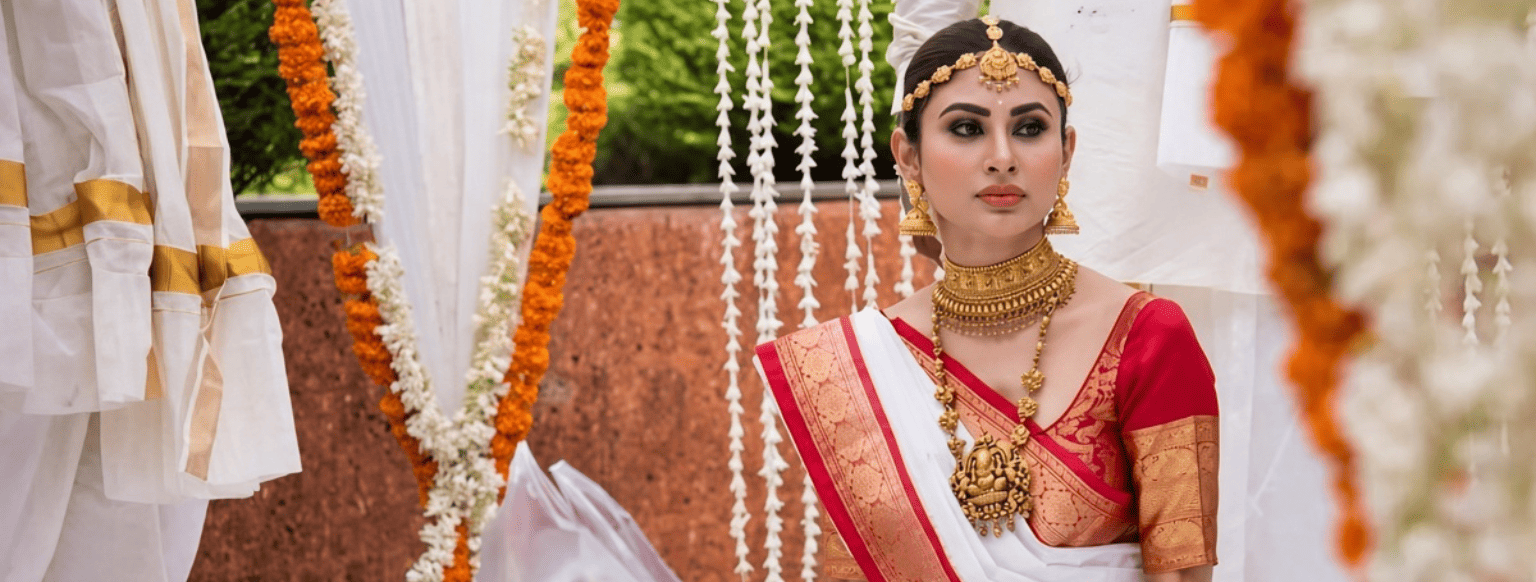
The Kerala Kasavu saree is instantly recognisable: an ivory or off-white body with a golden border. Its beauty lies in restraint. It is traditional, graceful, and deeply associated with Kerala’s cultural celebrations, especially Onam and weddings.
Most Kasavu sarees are cotton or cotton-based, though festive versions may include richer borders and ornamentation. The simplicity of the saree leaves room for personal styling.
Best for
Onam, Vishu, Kerala weddings, temple visits, and traditional celebrations.
Styling idea
Wear it with a gold blouse, jasmine flowers, and traditional gold jewellery for a timeless Kerala look.
15. Muga Silk Saree — Assam
Muga silk from Assam is known for its natural golden tone and durability. A Muga silk saree has a quiet luxury: it does not need excessive embellishment because the fabric itself has a distinctive glow.
Traditional Assamese motifs may appear in the borders and pallu, often inspired by local culture, nature, and ceremonial design. Muga sarees are often treated as heirloom pieces because they age beautifully when cared for properly.
Best for
Weddings, cultural ceremonies, festive occasions, and heirloom wardrobes.
Styling idea
Gold jewellery enhances the natural sheen of Muga silk without overpowering it.
How to Choose the Right Traditional Saree
The best saree is not always the most expensive or elaborate one. It is the one that suits the event, weather, comfort level, and personal style.
For weddings
Choose rich silks such as Kanjivaram, Banarasi, Paithani, Patola, Gadwal silk, or Muga silk. These sarees have ceremonial weight and look appropriate for grand occasions.
For summer events
Go for Chanderi, Tant, Chikankari, cotton Sambalpuri, or lightweight Pochampally. These fabrics are easier to carry in warm weather.
For office or formal daywear
Pochampally, Chanderi, Sambalpuri cotton, Tant, and understated Chikankari sarees work well. They look elegant without feeling too festive.
For festivals
Bandhani, Kasavu, Paithani, Gadwal, Sambalpuri, and Banarasi sarees are excellent choices depending on the region and celebration.
For heirloom value
Handwoven Kanjivaram, Banarasi, Patola, Paithani, and Muga silk sarees are often cherished across generations when maintained carefully.
Simple Care Tips for Traditional Sarees
Handloom and silk sarees deserve careful storage. Even sturdy fabrics can lose their charm if folded carelessly, exposed to moisture, or stored in plastic for too long.
Keep these basics in mind:
- Store silk sarees in breathable cotton or muslin cloth.
- Avoid direct sunlight for long periods, especially for bright colours.
- Refold silk sarees occasionally to prevent permanent crease marks.
- Dry-clean heavy silk, zari, embroidered, or heirloom sarees.
- Wash cotton sarees gently with mild detergent when suitable.
- Keep sarees fully dry before storing them.
- Avoid spraying perfume directly on silk or zari.
Good care helps preserve not only the fabric but also the craftsmanship woven into it.
The Lasting Beauty of India’s Saree Traditions
The traditional sarees of India are living examples of regional identity and skilled artistry. From the grandeur of a Banarasi to the simplicity of a Kasavu, from the geometry of Pochampally to the golden glow of Muga silk, every saree tells a different story.
If you are building a saree wardrobe, start with the occasions you dress for most. Add one breathable cotton or light handloom for regular wear, one festive silk for celebrations, and one statement saree that reflects your personal style. Over time, your collection becomes more than clothing—it becomes a map of craft, memory, and culture.
Explore traditional Indian sarees that match your occasion, comfort, and personal style. Choose timeless weaves, support skilled craftsmanship, and build a wardrobe you will treasure for years.
Suggested FAQ Section
1. Which is the most famous traditional saree in India?
There is no single answer because each region has its own iconic saree. However, Banarasi sarees from Uttar Pradesh and Kanjivaram sarees from Tamil Nadu are among the most widely recognised, especially for weddings.
2. Which sarees are best for Indian weddings?
Kanjivaram, Banarasi, Paithani, Patola, Gadwal silk, and Muga silk sarees are excellent choices for weddings. They offer rich fabrics, traditional motifs, and a ceremonial look.
3. Which traditional sarees are comfortable for summer?
Tant, Chanderi, Chikankari, cotton Sambalpuri, and cotton Pochampally sarees are good options for warm weather because they are lighter and more breathable.
4. What is the difference between Bandhani and Patola?
Bandhani is a tie-dye technique that creates dotted patterns on fabric, mainly associated with Gujarat and Rajasthan. Patola is a complex double ikat weaving tradition from Gujarat where the threads are dyed before weaving to form precise motifs.
5. Are traditional sarees suitable for office wear?
Yes. Lightweight and understated sarees such as Chanderi, Tant, Pochampally, Sambalpuri cotton, and simple Chikankari sarees can work beautifully for office or formal daywear.
6. How should silk sarees be stored?
Silk sarees should be wrapped in breathable cloth, kept away from direct sunlight and moisture, and refolded from time to time. Heavy silk and zari sarees are best dry-cleaned rather than washed at home.