How to Wear a Saree? Top 10 ways to wear Indian saree in an attractive way
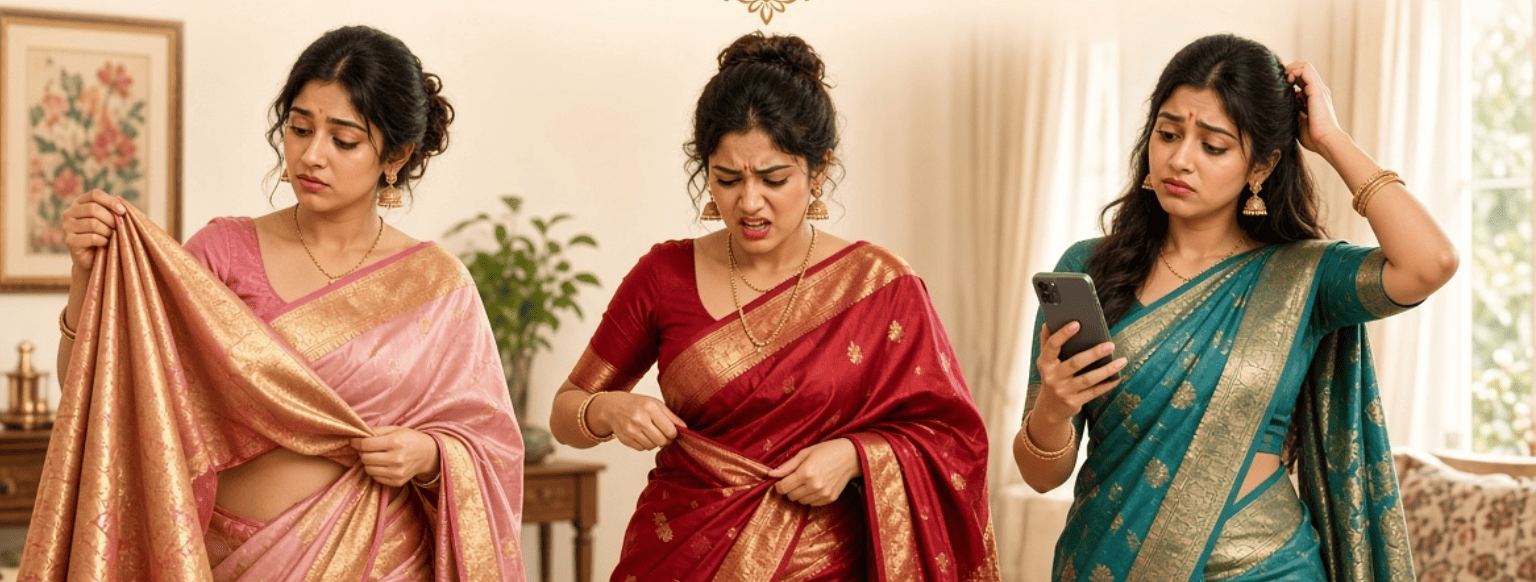
A saree looks unfinished for ordinary reasons: a loose petticoat, uneven pleats, a pallu that slides, or a fabric that was never going to grip. “Grace” is not a mood. It is a tight waist, even folds, and two pins you placed on purpose.
Most people searching how to drape a saree mean the Nivi style front pleats, pallu over the left shoulder the urban default from offices to wedding guest lists. Other drapes (Gujarati seedha pallu, Bengali wrap, Maharashtrian Nauvari) are different jobs. Learn Nivi first. Then change one thing at a time.
This is a working sequence: what to put on before the six yards, the Nivi steps in order, how to treat the pallu, and which regional styles are actually different — not just renamed Nivi.
Before the cloth: petticoat, blouse, fabric, pins
Petticoat. This is the foundation. It must sit at the natural waist (or slightly above, if that is how you wear sarees), knotted tightly on the side usually the left, so the knot does not sit under the front pleats. If it slides, everything slides. Drawstring plus a hidden knot, or a petticoat with a reliable elastic and a tie. Length should not flash below the saree hem.
Blouse. On and hooked before you drape, unless it opens fully at the front. Pulling a tight blouse over a finished pallu undoes the evening. The neckline should already match the jewellery you will wear.
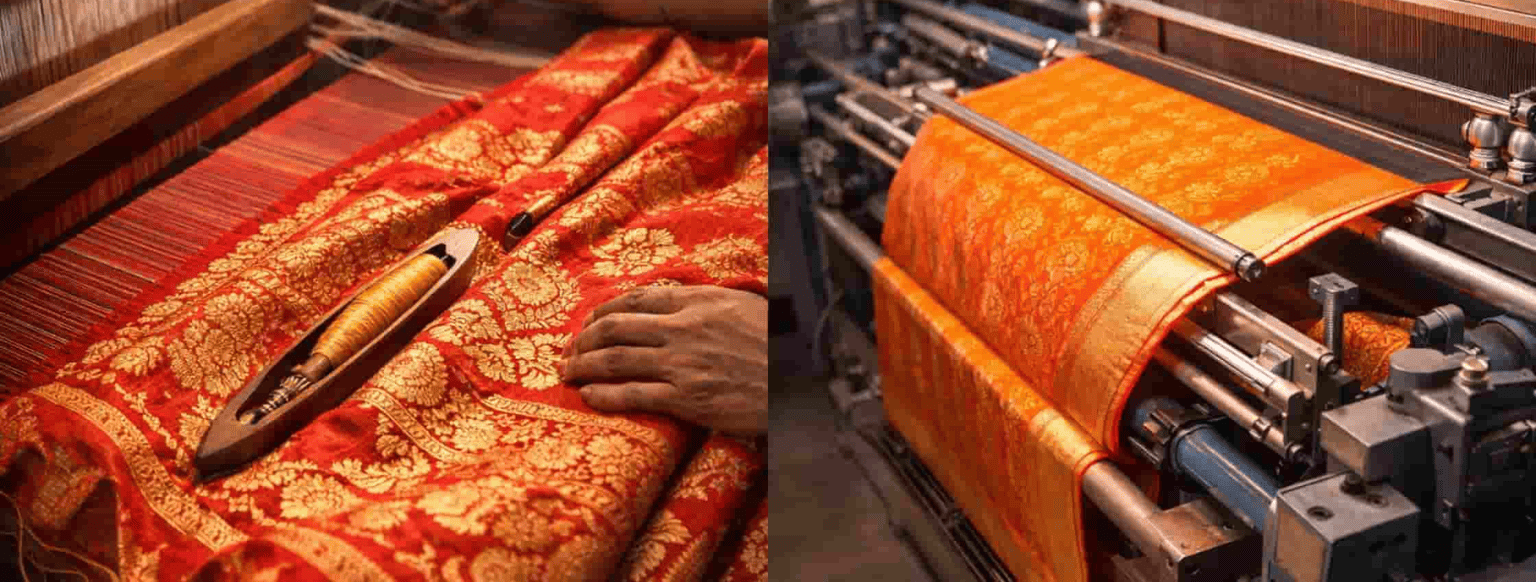
Fabric. Cotton and many handlooms grip. Georgette is manageable. Chiffon and satin need more pins and a firmer petticoat. Heavy silk needs a petticoat that can take the weight. Stiff organza does not behave like mul. If this is your first drape, do not start with unpinned chiffon.
Kit. Safety pins in two sizes, maybe a brooch for the pallu, a spare clip. Optional: a thin belt after the drape if you want a defined waist. Do not hunt for pins while holding pleats in your teeth.
Practice cloth. A cotton saree at home, once, sitting down and walking upstairs. The first attempt should not be in a mandap bathroom.
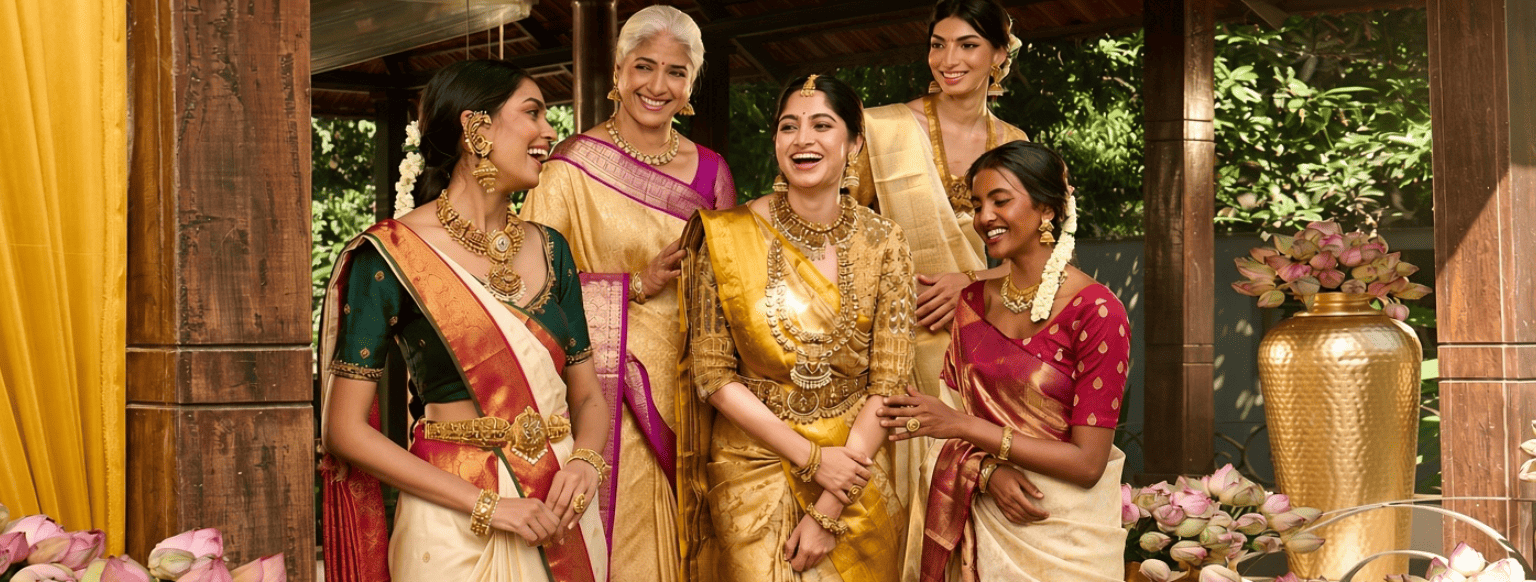
Choose the saree for the day before you start folding: cotton or linen for heat and hours; silk for ceremony; georgette for many festive evenings. Colour and blouse are a separate decision. The drape does not fix a fabric that is wrong for the weather.
Nivi drape: the step-by-step most people need
This is the Andhra-origin style that became the all-India default: pleats tucked at the centre front, remaining length around the hips, pallu up the back and over the left shoulder. Right-shoulder pallu exists as a preference or a regional variant; left is what most tutorials and tailors assume.
Work in a mirror. Keep the inner (usually less decorated) end as the starting end.
1. Lock the petticoat.
Stand straight. Tighten until you can slide two fingers under the band, not a fist. Knot on the side. If you will sit on the floor, err tighter.
2. Tuck the starting end.
Hold the plain inner end of the saree. Tuck it into the petticoat at the right side of your waist (your right). Wrap once around, keeping the lower edge even with the petticoat hem — or a finger above it so the petticoat never shows. Tuck along the waist as you go, all the way around, until you are back at the front. The hem should be level. A diagonal hem means you started uneven; undo and reset. This first round is the “skirt.” It must be smooth at the back.
3. Make the front pleats.
You should have a length of cloth hanging in front, enough for pleats plus the pallu journey. From the tucked edge, fold even pleats toward the left, about 4–5 inches (10–12 cm) wide — five to eight pleats is typical, fewer if the saree is stiff, more if it is very long and fluid. Keep the decorated border aligned so it reads as one line at the bottom, not a zigzag. Hold the stack, tap the lower edges on the floor once so they match, then tuck the top of the stack firmly into the centre of the petticoat, slightly to the left of centre if that sits better on your body. The pleats should fall straight, not twist. Pin through the pleat heads and petticoat if you do not trust the tuck — one or two pins, hidden.
4. Bring the rest around.
The remaining cloth goes around your hips (usually left to back to right, depending on how much you used). Keep it snug, not a balloon, not cutting in. This length becomes the pallu.
5. Pallu over the left shoulder.
From the back, bring the decorated end up and over the left shoulder so it falls in front. Arrange the width: some people like a broad, open pallu; some pleat the pallu into a neat stack. The fall in front is often about to the hip or mid-thigh — long enough to look finished, short enough that you do not step on it. Too long in front usually means the back is skimpy or the pleats stole too much cloth.
6. Pin so it stays.
Pin the pallu to the blouse at the shoulder (and sometimes a second pin a little lower). If the pallu is heavy, pin at the waist on the left as well, through pallu and petticoat, so a tug does not strip the shoulder. Check the back in a mirror: the diagonal from waist to shoulder should be smooth, not a twisted rope.
7. Walk, sit, raise an arm.
Adjust now. If the front pleats open, they were too loose or too few. If the petticoat shows, the first tuck was high on one side. If the pallu slides, you need a better shoulder pin or a less slippery blouse fabric.
That is Nivi. Everything else is a variation of pallu, pleat count, or a different regional system.
Pallu: left, right, head, or let it fall
Left shoulder (standard Nivi). Most photographs, most offices, most wedding guests.
Right shoulder. Used in some families and in some Gujarati-influenced drapes; also practical if you carry a bag on the left. It is not “wrong.” Tell your photographer if the family expects left.
Pleated pallu. Neat stacks, pinned, good for heavy zari so the work shows as a panel.
Open / fallen pallu. More fabric showing, more movement, more chance of catching. Pin at the shoulder anyway.
Pallu as a light veil over the head. Ceremonial, temple, some wedding moments. It is a temporary arrangement; you will want it off the head to eat. Do not confuse this with the everyday drape.
Seedha pallu (often called Gujarati). Pallu comes over the right shoulder and spreads across the chest in front, with front-of-body display of the decorated end. Pleats may sit differently. This is useful for a heavily worked pallu you want people to see without turning you around. It is a distinct drape, not Nivi with the pallu flipped as an afterthought — practise it separately.
“Butterfly” and other decorative pallu folds. Fine for a posed photo. Test whether they survive a buffet.
Double pallu / two-saree layering is a styling trick, not a beginner method. Get one cloth stable first.
Regional drapes (places, not just names)
India does not have one saree knot. If you are wearing a regional style for a reason, use the extra cloth and the method that belong to it.
Nivi (Andhra Pradesh, now pan-Indian). Described above. Six yards, petticoat, left-shoulder pallu.
Gujarati / seedha pallu. Decorated pallu displayed across the front, often over the right shoulder; associated with Gujarati festive and wedding dressing. Good with a busy pallu. Movement is different because the shoulder is not carrying the same hanging weight.
Bengali. A characteristic wrap with the pallu brought in a way that often covers more of the upper body; white-red cotton is the cliché, but the drape is the identifier. Pleats and the path of the pallu are not Nivi. If you want this look, follow a Bengali-specific sequence, not a Nivi tutorial with extra twists.
Maharashtrian Nauvari (nine-yard, kashta). This is not “Nivi without pleats.” It is extra length, traditionally draped dhoti/kashta-style through the legs, often without a petticoat, built for walking and performance (Gudi Padwa, Lavani, many festive contexts in Maharashtra). You cannot fake it with six yards. Learn it as its own skill.
Tamil traditional / madisar (nine-yard, Iyengar/Iyer and related styles). Another nine-yard system with its own tuck points and border display. Not a slightly different Nivi.
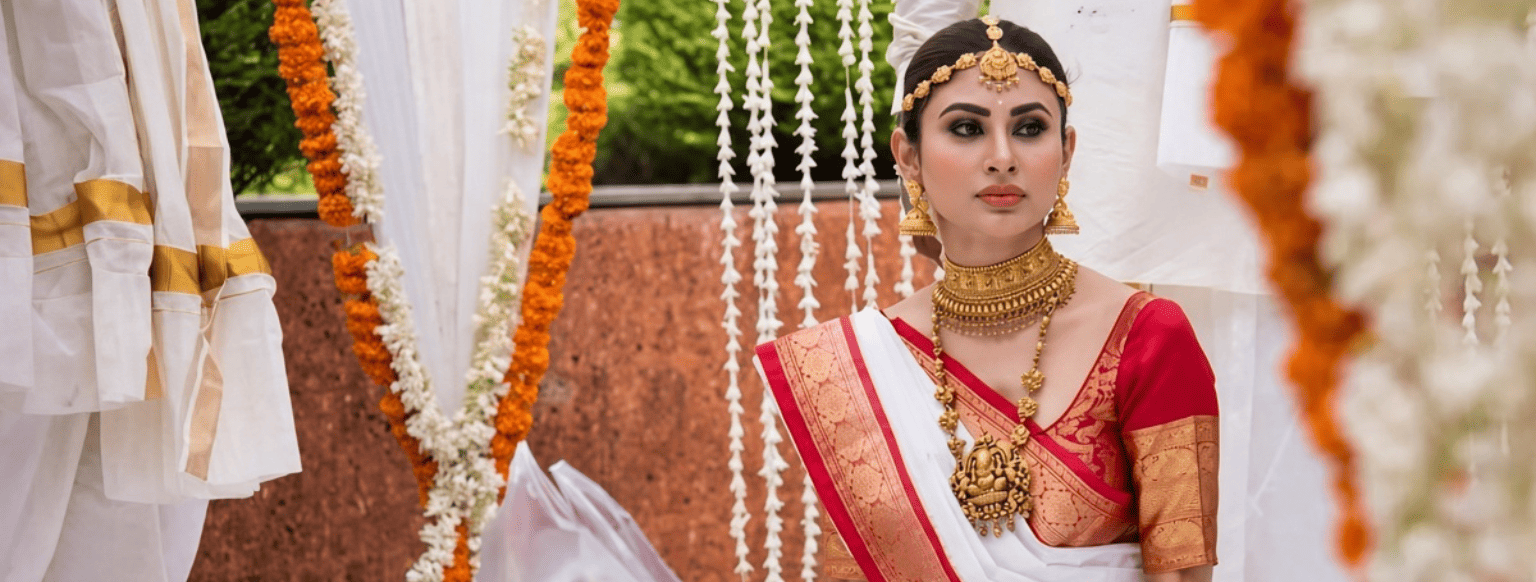
Kerala mundum neriyathum. Two pieces: a lower cloth and an upper cloth used as pallu — related to, but not the same as, a single six-yard Nivi. Kasavu cream-and-gold is the famous pairing, not the whole method.
Koli and other occupational drapes. Local, functional, not interchangeable with a party Nivi.
If the invitation is “wear a saree,” Nivi is the expected default unless you are in a community context that specifies otherwise.
Contemporary tweaks (after Nivi is solid)
A belt over the tuck line can neaten a slippery georgette and change the silhouette. It will not save a loose petticoat.
A jacket or shrug is clothing on top of a finished drape. Drape first.
Saree with trousers or a dhoti-style lower is a fusion cut; the pallu still needs a plan.
Lehenga-like volume means bigger, fewer pleats and sometimes a hoop or very full petticoat. It is heavier. Practise sitting.
Pre-pleated / ready sarees still need a tight petticoat and pallu pins. They remove the pleat step; they do not remove physics.
Mumtaz / vintage tight diagonal is a film look: tighter at the hip, pallu across the torso. Photogenic, less forgiving for food and sitting. Not the office default.
Fabric-specific notes
- Cotton: easiest teacher. Pleats stay. Hem stays.
- Silk (Kanjeevaram, Banarasi, etc.): weight helps the fall; pins must be strong; do not crush the pallu in a fist.
- Georgette: extra shoulder pin; consider a belt.
- Chiffon / satin: more pins, slower wrapping, test the petticoat colour (sheerness).
- Organza / net: stiffness or holes; lining and petticoat are part of the outfit.
- Velvet: heat and crush; winter only unless you like suffering.
Match blouse weight to the saree. A flimsy blouse under heavy silk shifts when you pin the pallu to it.
Common mistakes
Starting to pleat before the first wrap is even.
A petticoat you can pull down with one hand.
Pleats of mixed widths, so the border zigzags.
Pallu so long you kick it, because you used too little on the first wrap.
No pin on a silk pallu, then blaming the drape.
Right-shoulder pallu by accident, then fighting family photos.
Trying Nauvari or madisar from a Nivi video.
Draping in socks on a slippery floor, then wondering why the hem is wrong.
Doing hair and a tight blouse after the pallu is pinned.
Beginner protocol
- Cotton saree.
- Petticoat you have worn before.
- Phone timer: give yourself 25 minutes the first time.
- Finish each step before the next.
- Sit, climb two steps, raise both arms.
- Only then add jewellery.
Watching a video helps if you pause after every tuck. Do not play it through and then improvise.
A well-draped saree is a tight waist, even pleats, a pallu that is assigned a shoulder, and pins that match the fabric’s bad habits. Nivi is the method to learn first because it is what most rooms expect. Regional drapes are worth doing properly when the occasion is regional — with the right yardage, not a costume shortcut.
If you do one thing before the event, drape the actual saree once at home, sit in it, and add the pin you wished you had. That is the difference between a tutorial and an outfit.
Frequently Asked Questions
How do you drape a saree for beginners?
Tight petticoat, even first wrap, even front pleats tucked at the centre, pallu over the left shoulder, pin at the shoulder. Practise on cotton. Do not start with chiffon.
Which side does the pallu go?
Left shoulder for standard Nivi. Right is a valid variant (including many Gujarati seedha-pallu looks). Pick one and pin it; do not let it migrate.
How many pleats should a saree have?
Enough to use the extra front cloth without a bulky stack — often five to eight, about 4–5 inches wide. Stiff silk wants fewer, neater pleats; fluid fabric can take more.
Do I need a petticoat?
For Nivi, yes. Nauvari and some nine-yard styles are traditionally draped without one. Do not skip the petticoat on a six-yard Nivi and hope.
How do I stop the saree from coming undone?
Tighter petticoat, even first tuck, pins at pleat heads and pallu, fabric with some grip. Walking and sitting in a rehearsal shows you which pin you skipped.
What is the difference between Nivi and Gujarati drape?
Nivi: front pleats, pallu over the left shoulder down the back. Gujarati/seedha pallu: decorated pallu displayed across the front, often via the right shoulder. Different map of the cloth.
Can I drape a silk saree the same way as cotton?
The steps are the same; the pins and petticoat must be stronger, and you should handle the pallu so the zari does not crease into a permanent line.
How long does it take to learn?
A wearable Nivi is possible in one focused practice session. A drape you do not think about takes a few repetitions. Regional nine-yard styles take their own practice.
Is a belt necessary?
No. It can help georgette and fusion looks. It will not replace a loose petticoat.
What should I do if I am short or petite?
Keep the hem just above the floor, do not let the pallu eat your height (slightly shorter front fall, neater pleats), and avoid a huge fallen pallu that shortens the leg line. The Nivi steps do not change.