How to Carry Lehenga Like a Pro: Tips for Perfect Styling
A lehenga looks simple on a hanger: skirt, blouse, dupatta. On a body it is a small engineering problem. The waistband migrates. The blouse gapes when you lift a glass. The hem eats the shoe. The dupatta becomes a second job.
Instagram hides all of that with clips, a breeze machine and a stylist just out of frame. You do not have a stylist in the buffet queue.
Direct answer: Wear the skirt at the waist the garment was cut for (usually your natural waist, not low on the hip), in shoes you will actually use. Fit the blouse so it closes and stays when you raise both arms. Hem so you can walk without kicking cloth. Give the dupatta one drape and pin it. Match jewellery and hair to the density of the work, not to a bridal template. If you cannot sit, climb a step and dance a little in it at home, it is not styled yet.
Carrying a lehenga “like a pro” is not mystery. It is fit, then drape, then not adding a third idea.
What you are actually putting on
A lehenga set is three pieces that have to agree.
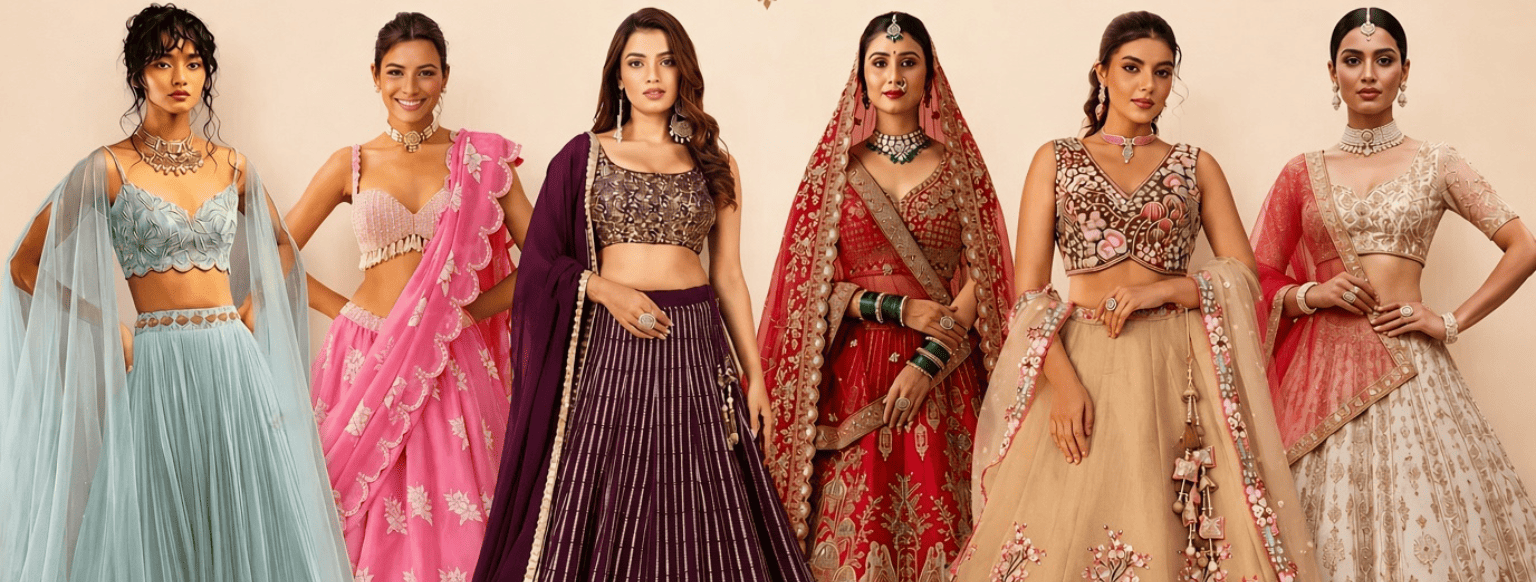
The skirt is the architecture: flare, kali or panel, can-can or none, drawstring or hooks, where the embroidery sits when you walk.
The blouse (choli) is the structure for the upper body and the anchor for most dupatta pins. If this is wrong, the skirt cannot save the photograph.
The dupatta is optional in some modern looks and non-negotiable in some rituals. It is also the piece people fidget with. Treat it as a designed layer, not as leftover cloth.
This is not a saree. A saree is a length you build on the body. A lehenga is pre-shaped; your job is to inhabit the shape, not invent one. A “lehenga saree” (stitched skirt with a saree-like pallu) sits between the two: easier than six metres of unstitched silk, still dependent on a pallu you must control.
If the three pieces were bought separately, try them together before the event. A blouse from another set, a denser dupatta, a belt that was not in the original sketch — any of these can throw the waist and the neckline.
Fit first: waist, blouse, length
Styling cannot correct a skirt that is sitting in the wrong place.
Waist. Most lehengas are meant to sit at or just above the natural waist. Too low, and the flare starts at the hip, the embroidery lands in the wrong horizontal band, and the blouse–skirt gap becomes a project. Too high, and you get a short torso and a blouse that rides. Tie or hook it firmly after the blouse is on, in the shoes you will wear. Drawstrings loosen; if there are hooks, use them. A hidden fabric belt can save a night; a decorative belt only if the waist was already correct.
Blouse. It should close without a gap at the bust when you look down, and without cutting in at the armhole when you lift your arms. Bridal blouses are often built; festive blouses are often under-built. If you have to hold your shoulders back in an unnatural way for the blouse to look right, the blouse is small or the cut is wrong. Alter early. Side seams are easier than armholes; if the shoulder is off, that is a bigger job.
Length. Hem for the shoe, not for the boutique carpet. A lehenga that is beautiful standing still and filthy or dangerous on stairs is the wrong length. Slightly shorter and clean beats a “bridal sweep” you step on. If the border is heavily worked, shortening is a specialist job — do not discover that the week of the wedding.
Inner layer. Seamless or well-chosen shapewear if you want it; a good petticoat or attached lining if the skirt is sheer. Scratchy can-can against bare skin will show on your face by hour two.
Ignore rigid body-type charts (“pear must wear A-line”). Try volume on your body. A mermaid hem can look sharp at a reception and miserable for floor rituals. A huge flare can overwhelm a small frame or look proportional if the blouse is clean and the jewellery is quiet. The test is whether your face is still the point.
Put it on in an order that does not fight you
Do this at home once, in event shoes, before anyone else is watching.
- Base. Innerwear that does not cut a line through a fitted blouse. If the blouse is backless or deeply cut, solve that with the blouse design, not with straps that will show.
- Blouse. Fasten it fully. Move: arms up, twist, sit in a chair. Fix now.
- Skirt. Step in, lift to the waist, fasten. Smooth the flare so panels hang evenly. Check the front embroidery is centred.
- Dupatta. Choose the drape (below) and pin through dupatta and blouse where needed. Matching pins, not a silver constellation on a navy pallu.
- Jewellery, then hair — or hair first if the drape needs a clear shoulder. Heavy earrings change how you hold your head; the dupatta should already be secure.
- Last look, back and side. Walk, sit, climb one step, pretend to pick up a plate.
If a helper is dressing you on the day, you should still have done this once. They cannot know that the left hook bites or that the dupatta slips when you sit unless you have met the garment.
Dupatta: pick a job and pin it
An unpinned dupatta is how a lehenga looks busy. Choose one language.
| Drape | What it does | Best when | Watch-out |
|---|---|---|---|
| One shoulder, pallu back | Clean, familiar, easy to walk | Most weddings, sangeet if pinned | Slides if only perched, not pinned |
| Both shoulders, open front | More coverage, traditional read | Ceremony, elders, temple-adjacent | Can look bulky with a heavy blouse |
| Saree-style across the body | Elongates, more “draped” | When you want a saree echo | Needs a secure waist; extra fabric to manage |
| Side-pleated, pinned at the waist | Keeps hands free, dance-friendly | Sangeet, reception | Pleats must be even or it looks rushed |
| Belted at the waist | Modern, keeps cloth still | Indo-western blouse, contemporary reception | Belt must match; a thin wrong belt cheapens heavy work |
| Cape instead of dupatta | Clear shoulders, structured | Reception, winter layer | Confirm the event does not expect a pallu |
| Off | Least fidget | Some receptions, fashion-forward briefs | Wrong for many ceremonies; ask |
Do not combine cape and full dupatta and veil unless the ritual needs it. Two trailing layers is how you stand on your own outfit.
A dupatta that is denser than the lehenga will steal the frame. A wispy net on a heavily worked skirt can look unfinished. They should be in the same conversation.
Fabric and weight are a stamina question
Silk and Banarasi-type brocade hold a line and photograph with depth. They also heat and weigh. Velvet is a night/winter cloth. Georgette and chiffon move, pack, and forgive a long function. Organza needs lining or it photographs like plastic.
For a ceremony you will sit through, breathable lining and a skirt you can fold onto a chair matter more than another inch of can-can. For a short reception entrance, structure can be the point.
Handwoven or mill, embroidered or woven: the carrying problem is the same. If the skirt is heavy, practise walking in it. Bridal weight surprises people who only stood in it for a boutique mirror.
Occasion: density should follow the hours
Wedding ceremony. More coverage, more stable drape, jewellery that will not snag. Floor sitting, fire, hugs. Hem and blouse first.
Sangeet. Movement. Dupatta pinned or belted or off. Blouse you can lift your arms in. Shoes you can dance in. This is where fusion (crop blouse, sneakers only if the floor and the family can live with them) is easiest to defend.
Reception. Cleaner silhouette, night-readable colour, maybe a jacket or cape. You still need to sit for dinner.
Day festive / smaller gathering. Lighter cloth, less work, quieter jewellery. A wedding-weight lehenga at a lunch looks like you brought the wrong event.
You do not need a new lehenga for every function. You need the right weight and a dupatta strategy.
Accessories, hair, shoes: one thing leads
If the lehenga is heavily worked, jewellery should not run a parallel bridal campaign. If the lehenga is quiet, earrings or a necklace can take the job.
- Maang tikka and nath read bridal in many rooms; guests should be careful
- Hair off the shoulder pin; a bun or a controlled fall beats a style that eats the dupatta
- Shoes: try the hem in them; wedges and block heels are not a lesser look if you can stand
- Potli or clutch: one hand occupied is enough; you will need the other for the skirt on stairs
- A belt is structure, not extra sparkle, unless the outfit was designed for it
Makeup should survive the same hours as the blouse. The lehenga cannot compensate for a sliding bindi you fix every ten minutes.
How you walk and sit is part of the garment
Take shorter steps than in trousers. Let the flare move; do not kick it forward like a obstacle. On stairs, pick up the front from the inside if you must, not a fistful of embroidery.
Sit from the hips, smooth the skirt so you are not crushing a worked panel under a thigh if you can avoid it. Practise getting out of a car. Heavy lehengas have a physics problem in sedan seats; know it before the venue.
Posture: if you have to perform “regal” for the blouse to sit, the blouse is wrong. Shoulders easy, chin where you normally keep it. Confidence in this context is mostly not fidgeting.
Mistakes that show from across the mandap
- Skirt on the hips “because it felt casual”
- Blouse that only works with your arms glued to your sides
- Dupatta unpinned, or pinned only to itself so it slides as a unit
- Hem for barefoot boutique, worn with four-inch heels (or the reverse)
- Every accessory the boutique suggested, all at once
- Can-can so stiff you cannot sit for the ritual you came for
- A brand-new drape on the morning of
- Perfume and deodorant on the blouse neckline that will mark silk
- Ignoring the back view — ceremony photographs happen there
Luxury in a lehenga is often the quiet parts: even flare, a waist that stays, a pallu that does not need you.
A 15-minute rehearsal worth doing
Wear the full set. Walk the corridor. Sit on the floor and on a chair. Climb stairs. Raise both arms. Eat something. Put on the bag. Check the back.
Mark where you needed a pin. Note whether the drawstring slipped. If the dupatta lost its job, change the drape, do not hope the venue will be still air.
That rehearsal is the difference between carrying a lehenga and being carried by one. The cloth will still be the same. You will look like you meant to wear it.
FAQs
How do you wear a lehenga correctly?
Blouse first and fully fastened, skirt at the intended waist (usually natural waist), secured with hooks or a firm drawstring, hem checked in the event shoes, dupatta draped one way and pinned to the blouse. Then jewellery. If it fails a sit-and-arms-up test, alter it.
How do I carry a lehenga without tripping?
Hem for your shoes, take shorter steps, pick the front up from the inside on stairs, and do not leave a trailing unpinned dupatta. Practise in the actual skirt weight.
Where should a lehenga sit on the waist?
Where it was cut to sit — typically the natural waist, not low on the hips. Too low drops the flare and the embroidery line and opens a gap under the blouse.
How should I drape a dupatta on a lehenga?
One-shoulder pinned is the default. Both shoulders for more coverage; saree-style or belted for a contemporay hold; cape if the event allows no pallu. Pick one. Pin through the blouse.
Can I wear a lehenga without a dupatta?
Yes for some receptions and modern festive looks. For many ceremonies and for elders’ expectations, a dupatta or alternative coverage still matters. Ask if you are unsure.
Why does blouse fit matter so much?
It holds the neckline, the arms-up test, and most dupatta pins. A loose or biting blouse makes even a perfect skirt look unfinished.
What fabric is easiest to wear for long events?
Georgette, chiffon and well-lined lighter silks. Heavy brocade, velvet and dense can-can photograph as grand and wear as weight. Match fabric to how many hours you will sit and dance.
Is a lehenga suitable for every body type?
A well-cut lehenga can work on many bodies; the variables are flare, waist placement, blouse and length, not a single approved silhouette. Try volume on you instead of following a body-type rule.
How do I make a lehenga look expensive?
Fit, even flare, controlled dupatta, hem that clears the floor cleanly, and jewellery that does not compete with the work. Extra stones on a poorly sitting waist will not read as luxury.
What jewellery goes with a lehenga?
Match density: heavy lehenga, quieter metal; simple lehenga, one stronger piece. Guests should be careful with full bridal sets (tikka, nath, layered necklace) that signal bride in many rooms.