Different Types of Saree Fabrics You Should Know About
A saree can fail for a boring reason. The colour was fine. The blouse was fine. The fabric was wrong for the room: too hot, too slippery, too stiff, or too casual for the invitation.
Fabric is not a finishing detail. It decides whether the pallu stays, whether you can sit on the floor, whether the saree needs dry cleaning, and whether it looks like an heirloom or like partywear. “Silk” and “cotton” are only the start. Banarasi is a weave, not a separate fibre. Chiffon and georgette are cousins, not twins.
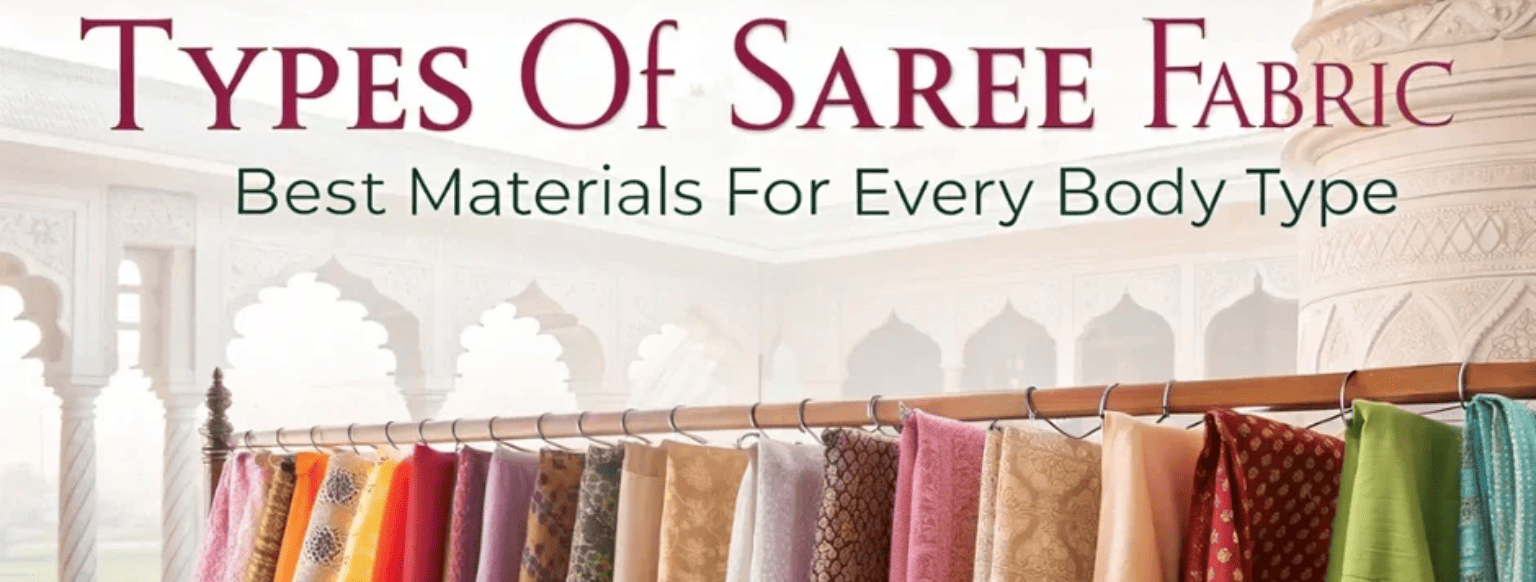
This is a working guide to the types of saree fabrics you will actually shop for — how each one behaves, what it suits, and how to choose without getting stuck on the shiniest option.
Fibre, weave, and finish are three different things
Shops mix these on purpose because the mix sells.
Fibre is what the yarn is: silk, cotton, linen, viscose/rayon, polyester, wool, or a blend. This drives breathability, sheen, and a lot of the care.
Weave or construction is how the cloth is built: plain weave, satin weave, crepe, georgette, organza, net, velvet pile. Two silks can feel unrelated because one is a dense Kanjeevaram and the other is a light crepe.
Finish is what happened after: print, embroidery, sequins, starch, softening, a “silk look” coating on polyester.
When a tag says “Banarasi silk,” both words matter. Banarasi describes a brocade tradition from Varanasi. Silk describes the fibre — unless it is a Banarasi-look on georgette or organza, which is common and not a crime if the price is honest.
If you can name fibre + how it falls + how formal the day is, you can ignore half the marketing.
Silk (including the famous named silks)
Silk is the fibre people mean when they want sheen, drape with body, and a ceremonial mood. It is not automatically the most comfortable, and it is not one cloth.
Mulberry silk (used in many Kanjeevaram, Mysore, and finer Banarasi pieces) is smooth, often brighter, and can be heavy or relatively light depending on the weave.
Tussar, muga, eri are other silks. Tussar is slubbier and more matte. Muga has a natural golden cast. These read as textile, not as party shine.
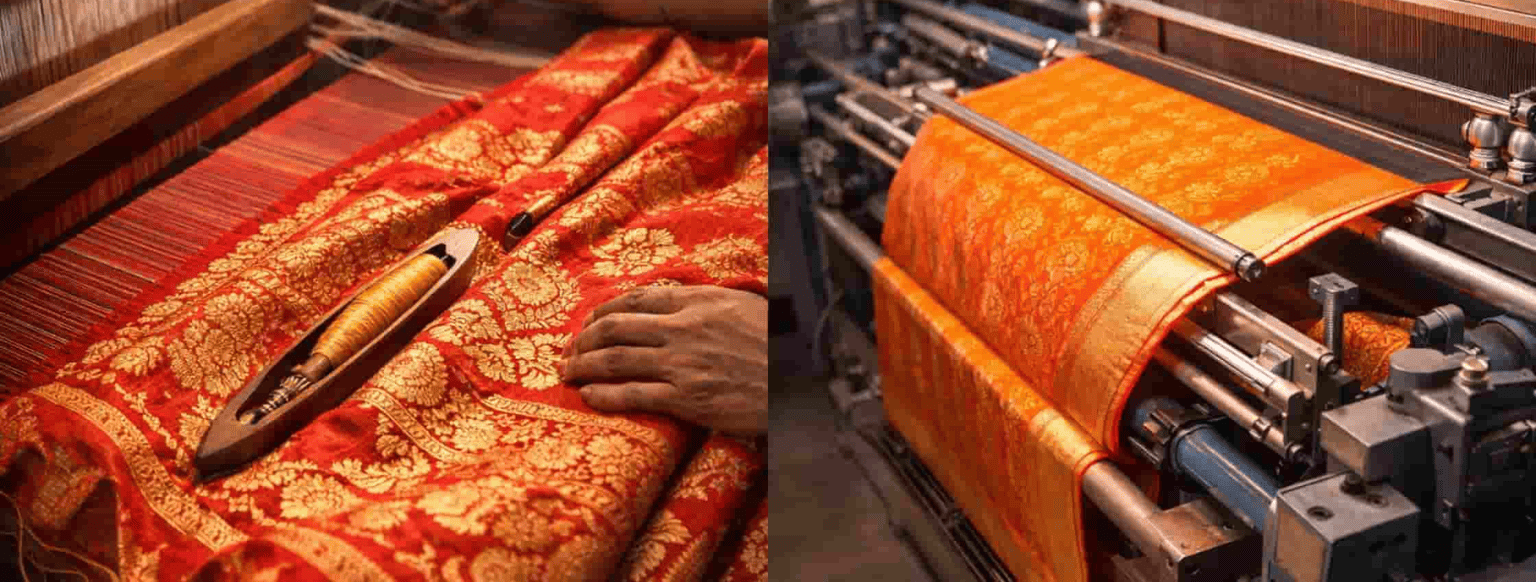
Named silks — Kanjeevaram/Kanchipuram, Banarasi, Mysore, Paithani, and others — are regional weaving traditions, usually on silk. Buy them as weaves. A “Banarasi” printed on satin is a print.
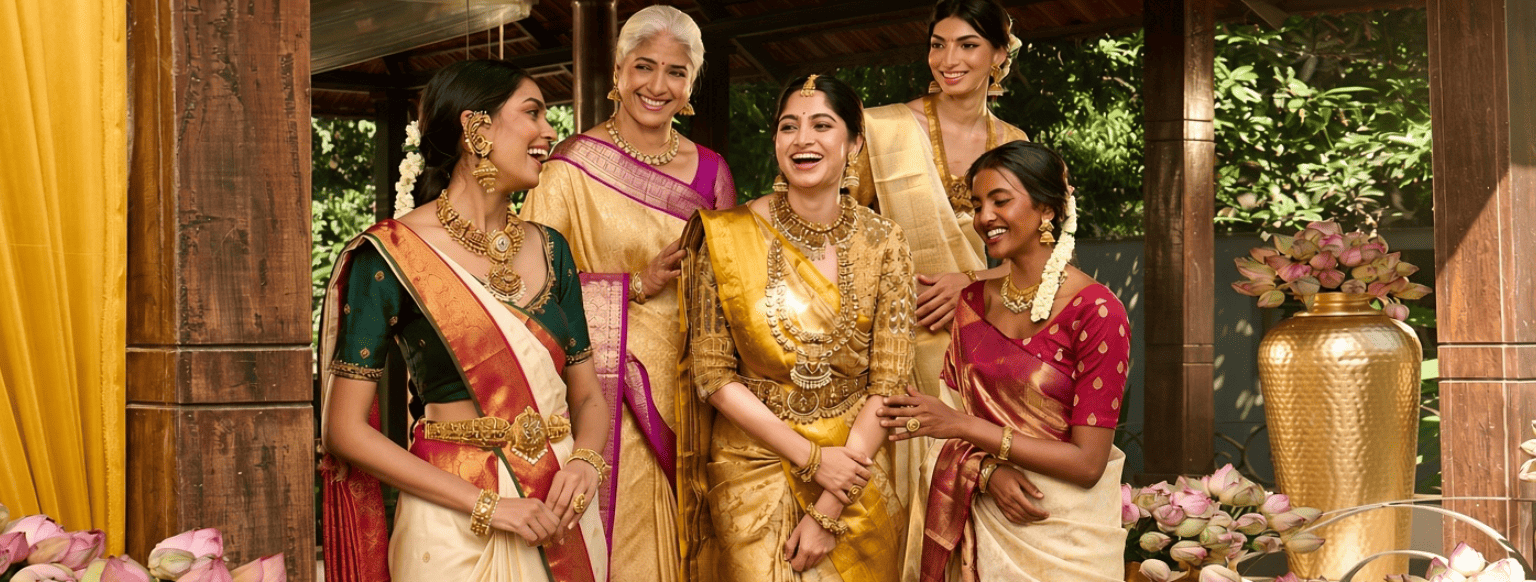
Wear silk when the occasion can take formality: weddings, important pujas, festive evenings. A lighter silk or silk-cotton can work for daytime functions. A brick of zari in April heat is a comfort decision, not a status one.
Watch for: polyester satin sold as silk; weight that is only starch; foil zari that sits on the surface. Ask what the fibre is. Check the reverse of woven work.
Care: heavy zari pieces are safer with professional cleaning. Store in cotton, not plastic. Refold so one crease does not become a cut. Do not spray perfume on the cloth.
A plain silk blouse in a related weight usually looks more expensive than a flimsy fashion blouse under a dense weave.
Cotton
Cotton is still the saree people live in. It breathes, takes print and handloom texture well, and forgives a long day.
It can be crisp (starched handloom, some Bengal and Andhra cottons) or soft (mul, washed cotton). Starch makes a cotton look “done” for a function and less kind after two hours.
Wear it when the day is hot, long, or practical: office festive, daytime family events, travel, everyday traditional wear.
Watch for: calling it boring. A good handloom cotton with a real border often looks more considered than a shiny party saree in daylight. Also watch shrinkage and colour bleed on cheap dyed pieces — wash or dry-clean according to the seller’s honest advice, not a guess.
Cotton pairs easily with a simple blouse. It does not need heavy embroidery to finish the outfit.
Linen (and linen-look blends)
Linen is a plant fibre with a dry, slightly slubby surface and an airy hand. It wrinkles. That wrinkle is part of the look; fighting it with heavy starch usually makes it worse.
Wear it when you want a modern, modest, office-friendly drape in heat. It photographs as quiet rather than festive.
Watch for: polyester “linen look.” Real linen has a particular dryness. Blends change the wrinkle and the breathability. If you need it for a solemn function, know that linen rarely reads as bridal, and that is fine.
Silver or duller jewellery sits more naturally on linen than a full temple set, unless you are mixing on purpose.
Chiffon
Chiffon is sheer, light, and slippery. It floats. It does not hold a sculptural shape. Pins and a well-tied petticoat are part of the garment.
Wear it when you want movement: receptions, evening functions, a festive look that is not a heavy silk. It is cooler than dense silk if the embroidery is not a full crust of sequins.
Watch for: pallu that will not stay; visible petticoat colour; snagging. A lined or well-chosen underskirt matters. A structured blouse (boat or well-finished sleeveless) gives the upper body a line the fabric lacks.
Chiffon is a construction more than a fibre. It can be silk chiffon or, very often, polyester. The drape is similar; the heat and the ageing are not. Silk chiffon is usually softer and more expensive. Polyester chiffon is common, practical, and should be priced as such.
Georgette
Georgette is chiffon’s slightly grainier cousin: still light, still fluid, but with more grip and a bit more matte crinkle. Many people find it easier to drape than satin or chiffon because it does not slide quite as much.
Wear it when you want a dressed look with less drama than organza or silk, including office parties and many festive evenings.
Watch for: the same fibre question — silk georgette vs polyester. Polyester georgette is one of the most common “party saree” bases. It can look excellent. It will not behave like a Kanjeevaram in the cupboard twenty years later.
Georgette takes print, embroidery, and pre-stitched drapes well. It is a workhorse, not a lesser silk.
Crepe
Crepe has a pebble or crinkle surface and a fluid, slightly weighty fall without high shine. It is easy to live in compared with satin.
Wear it when you want something polished for work functions or daytime events and you do not want organza stiffness or silk formality.
Watch for: cheap crepe that clings or pills. A bit of body is useful; limp crepe looks tired by evening.
A simple blouse is enough. Crepe is already doing the “finished fabric” job.
Satin
Satin is a weave with a smooth, glossy face and a duller back. The fibre can be silk or, very often, polyester or acetate. The look is evening: light catches the drape.
Wear it when the event is a reception or party and you want chic more than temple.
Watch for: slip. Satin will tell you if your petticoat knot is lazy. It also shows every wrinkle from sitting. Drape slowly. Avoid over-handling with damp hands.
A well-cut blouse matters more than extra work on the satin itself. The fabric is already loud in the nicest way.
Organza
Organza is light but crisp. It stands slightly away from the body. That is why it holds embroidery and floral appliqué without collapsing, and why it can look festive even when the colour is pale.
Wear it when you want a contemporary festive or wedding-guest look: structured, a little transparent, good for evening.
Watch for: scratchiness, visible seams, and a petticoat that fights the stiffness. Organza needs a careful blouse and often a lining strategy. It can crease in sharp lines if crushed in a bag.
Silk organza and polyester organza both exist. Silk is usually softer at the hand; polyester is common and tougher for heavy work.
Net
Net is an open mesh. On its own it is a curtain. As a saree it is almost always a base for embroidery, sequins, or stone work, often with a lining or a solid undersaree.
Wear it when the brief is decorative evening wear. It is not a daily fabric.
Watch for: weight of the work (a heavily embroidered net can be as tiring as silk), snagging, and comfort of the lining. If the net is unlined and the embroidery is sparse, the petticoat becomes the outfit. Plan that colour.
Net is a party construction, not a heritage weave. Price the work, not the word “net.”
Velvet
Velvet is a pile fabric: thick, soft, light-absorbing, warm. Dark colours look especially rich.
Wear it when the event is a winter wedding or a cool evening. It is the wrong tool for a humid afternoon.
Watch for: crush marks if you sit for a long time, and heat. Keep the blouse clean; velvet already has presence. A boat or high neck in a related weight looks intentional. Ruffles on velvet plus a heavy pallu is a lot of volume.
Store it so the pile is not crushed in the same fold for years.
Rayon / viscose
Rayon (viscose) is a regenerated cellulose fibre. It is soft, often fluid, and can mimic cotton or silk at a lower price. It is popular for daily and casual printed sarees.
Wear it when you want an easy, affordable drape for home, informal gatherings, or travel.
Watch for: shrinkage, colour run, and weaker wet strength. Follow wash instructions. It is not “fake silk” in a moral sense; it is a different fibre and should be sold as such. Some rayon is more breathable than polyester; it is still not cotton in a heatwave.
Blends and “looks” you will meet on tags
Silk-cotton / cotton-silk. Lighter than pure ceremonial silk, more formal than plain cotton. Gadwal-style bodies often use this logic. Excellent for temples and long festive days.
Chanderi. Often silk with cotton, light and slightly sheer. A fabric-and-town name together.
Kota / Kota Doria. Airy checked weave, often cotton with silk, built for heat.
Tissue. Metallic or silk-metallic, crisp, festive, can be scratchy. More occasion than everyday.
Khadi and handloom cotton. Texture is the point. Daily and ideological as much as decorative.
Polyester “silk.” Shine without silk’s price or ageing. Fine if the price and the care label are honest. Disappointing if you thought you bought mulberry.
Read the fibre line. The front of the tag is a mood. The back is the garment.
Banarasi, Kanjeevaram, and other names that are not fabrics
These belong in a “types of silk sarees” conversation more than a fibre list, but shops put them next to “chiffon” anyway.
- Banarasi — brocade tradition, usually silk, sometimes on organza or georgette
- Kanjeevaram — dense South silk, often contrast border
- Mysore silk — often smoother, lighter, cleaner body
- Paithani, Patola, Baluchari — other weave languages, usually silk
If you only remember one distinction: fabric tells you how it will feel; the regional name tells you how it was patterned and where that language comes from. You need both to shop.
How to choose: occasion, climate, hours
Match the day, not the hierarchy of prestige.
| Situation | Fabrics that usually behave |
|---|---|
| Everyday / heat | Cotton, linen, light rayon, Kota, washed silk-cotton |
| Office / daytime formal | Cotton, linen, crepe, light silk-cotton, simple georgette |
| Festive evening | Georgette, chiffon, lighter silk, organza, well-done satin |
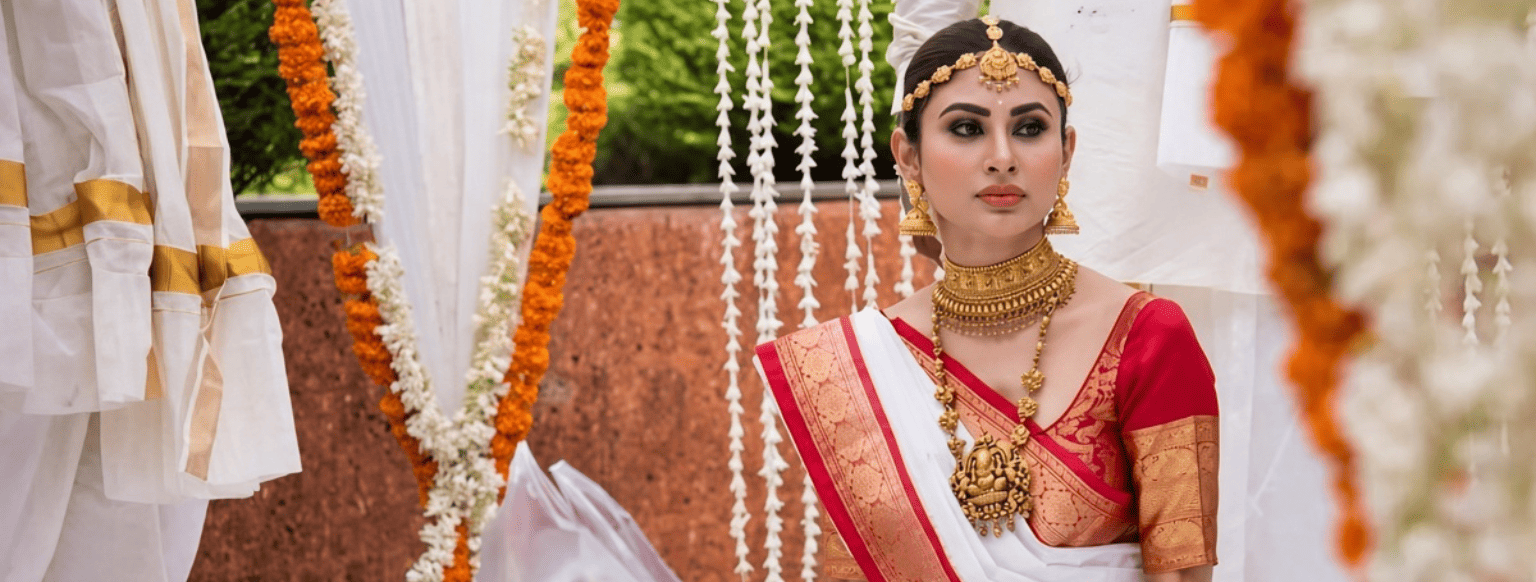
| Wedding (bride / close family) | Dense silk weaves, heavy Banarasi or Kanjeevaram, sometimes velvet in winter |
| Wedding guest, long day | Chanderi, lighter Banarasi, Mysore, Gadwal-type, tussar, good georgette |
| Winter night | Velvet, heavier silk |
| Lots of sitting / floor | Cotton, crepe, georgette with grip — not unpinned chiffon or satin |
Comfort is not a side note. A beautiful saree you tug at all evening is a bad choice. If you will dance, eat, or travel, choose grip and breathability over shine.
Also match the blouse weight to the saree. A flimsy blouse under heavy silk looks unfinished. A stiff brocade blouse under fluid chiffon can look disconnected.
Drape and petticoat notes people skip
Slippery fabrics (chiffon, satin, some silks) need a firm petticoat, a serious drawstring, and pins you have tested. The underskirt colour should not flash through sheers.
Stiff fabrics (organza, some starched cottons, tissue) need space at the waist; they do not cling into pleats the same way.
Heavy silks need a petticoat that can take the weight so the knots are not doing all the work.
If you are new to a fabric, drape it once at home before the event. The first satin pallu in a hotel bathroom is a rite of passage you can skip.
Care, briefly and honestly
- Cotton, linen, many rayons: often home-washable if dyes are stable; separate colours; do not assume.
- Silk with zari, velvet, heavily embroidered net/organza: prefer professional cleaning unless you know the piece.
- Georgette and chiffon: depend on fibre; polyester is usually easier than silk.
- All of them: air after wearing, store in cotton, keep perfume off the cloth, refold silks.
A fabric that needs dry cleaning after every office day is the wrong everyday saree, no matter how pretty it was on the hanger.
Common mistakes
Buying “silk” from a photo because it was shiny.
Wearing velvet to a daytime summer wedding.
Choosing unlined net and then fighting the petticoat in every picture.
Treating Banarasi as a fabric rather than asking what it is woven on.
Matching a heavy embroidered blouse to a heavy embroidered georgette and a heavy necklace.
Ignoring climate because the invitation said “ethnic glam.”
Expecting linen not to wrinkle.
The types of saree fabrics are a toolkit. Silk carries ceremony. Cotton and linen carry the week. Chiffon and georgette carry movement. Organza and net carry decoration. Velvet carries winter. Rayon carries an easy price.
If you are choosing one next, name the hours and the heat first. Then pick the fibre that will still feel like a good decision after you sit down. The right saree is the one whose fabric matches the day — not the one with the most impressive word on the tag.
Frequently Asked Questions
What is the most comfortable saree fabric?
For heat and long wear, cotton, linen, and many silk-cottons. Crepe and georgette are easier than satin or unpinned chiffon. “Comfortable” also depends on weight of embroidery and how tight the blouse is.
What is the difference between chiffon and georgette?
Both are light and fluid. Chiffon is usually sheerer and more slippery. Georgette has a grainier texture and a bit more grip, so many people find it easier to drape.
Is Banarasi a type of fabric?
No. It is a weaving tradition, typically on silk (and sometimes on organza or other bases). “Banarasi” describes the brocade language, not a fibre by itself.
Which fabric is best for weddings?
For a bride, families often choose a dense silk weave such as Kanjeevaram or a heavy Banarasi. Guests are usually more comfortable in a lighter silk, Chanderi, or a well-made georgette, depending on the heat and the length of the day.
Is satin the same as silk?
No. Satin is a weave with a glossy face. It can be silk satin or, very often, polyester. Silk is a fibre. A satin saree can look luxurious without being silk.
What should I wear to the office?
Cotton, linen, crepe, or a simple silk-cotton. High-shine satin, heavy net, and full zari silk usually look overdressed under office lights and feel worse.
Does organza work for a wedding guest?
Yes, especially in the evening, if you are comfortable with a slightly stiff, semi-sheer drape and have planned the blouse and petticoat. It is less ideal if you will sit on the floor for hours.
How can I tell polyester from silk?
The label is the first tool. In the hand, silk often has a warmer, less plastic sheen and a different rustle; polyester can feel more static and uniformly shiny. Burn tests are for scraps, not for a saree you plan to wear. When the price is very low and the shine is very high, assume it is not mulberry silk.
Which fabrics need dry cleaning?
Heavy silk with zari, velvet, and heavily embroidered organza or net are the usual candidates. Simple cotton and many polyester georgettes can be easier at home if the dye is stable. When unsure, ask the seller and default to gentler care.
Can I have one fabric for everything?
Not really. A good cotton or linen plus one festive silk or georgette will cover more of real life than a single “perfect” saree. Fabric follows the day.